24/7 Available
Emergency Water & Sewer Response
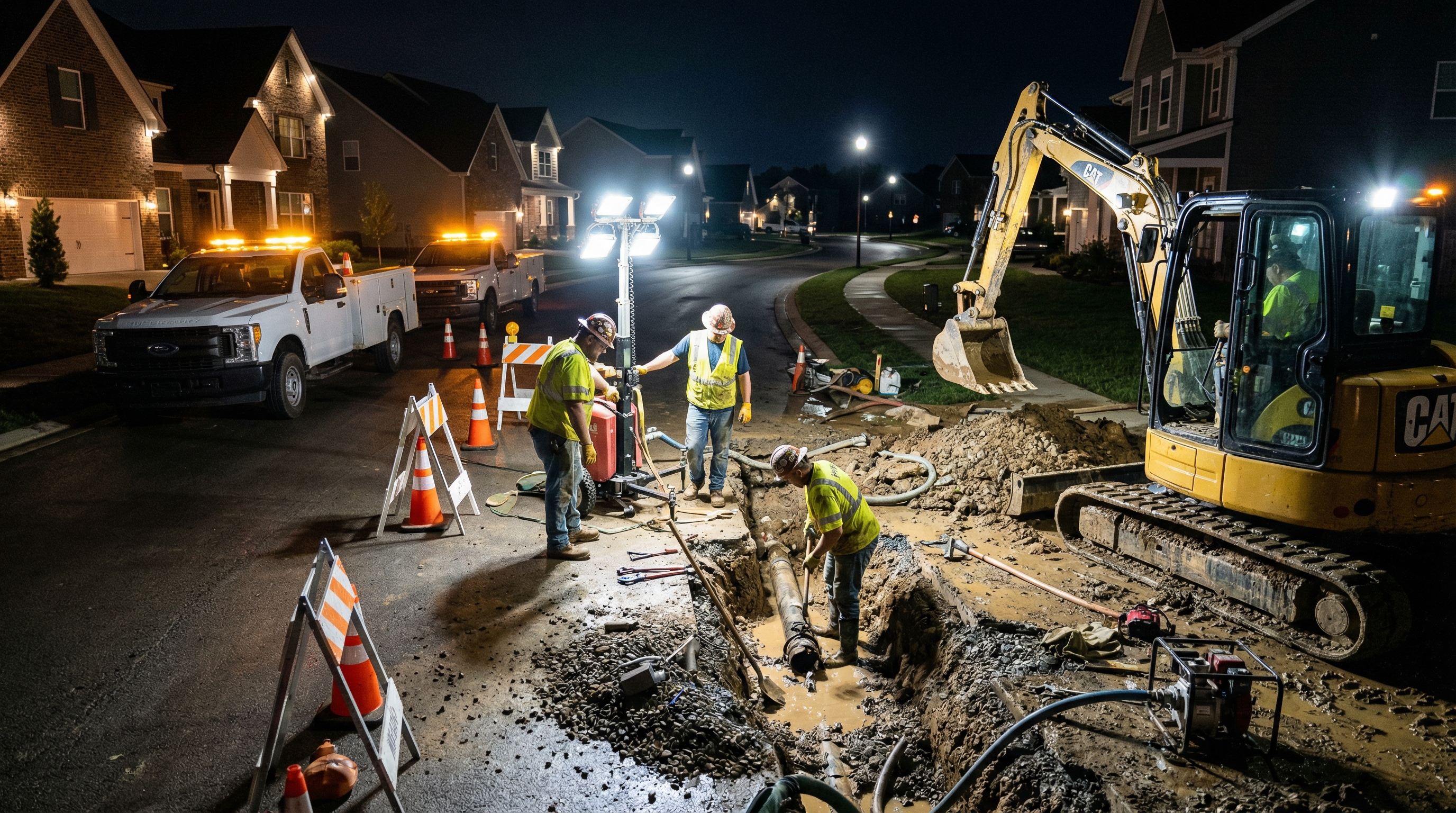
24/7 emergency response across Middle Tennessee - crews mobilize immediately to isolate, repair, and restore service.
CALL NOW: 615-577-7907Here is exactly what happens when you call PMT.
When you call, PMT crews begin mobilizing immediately - trucks loaded with materials, equipment, and everything needed to address the failure.
The crew identifies and isolates the affected section of water main to stop the flow and protect surrounding infrastructure from further damage.
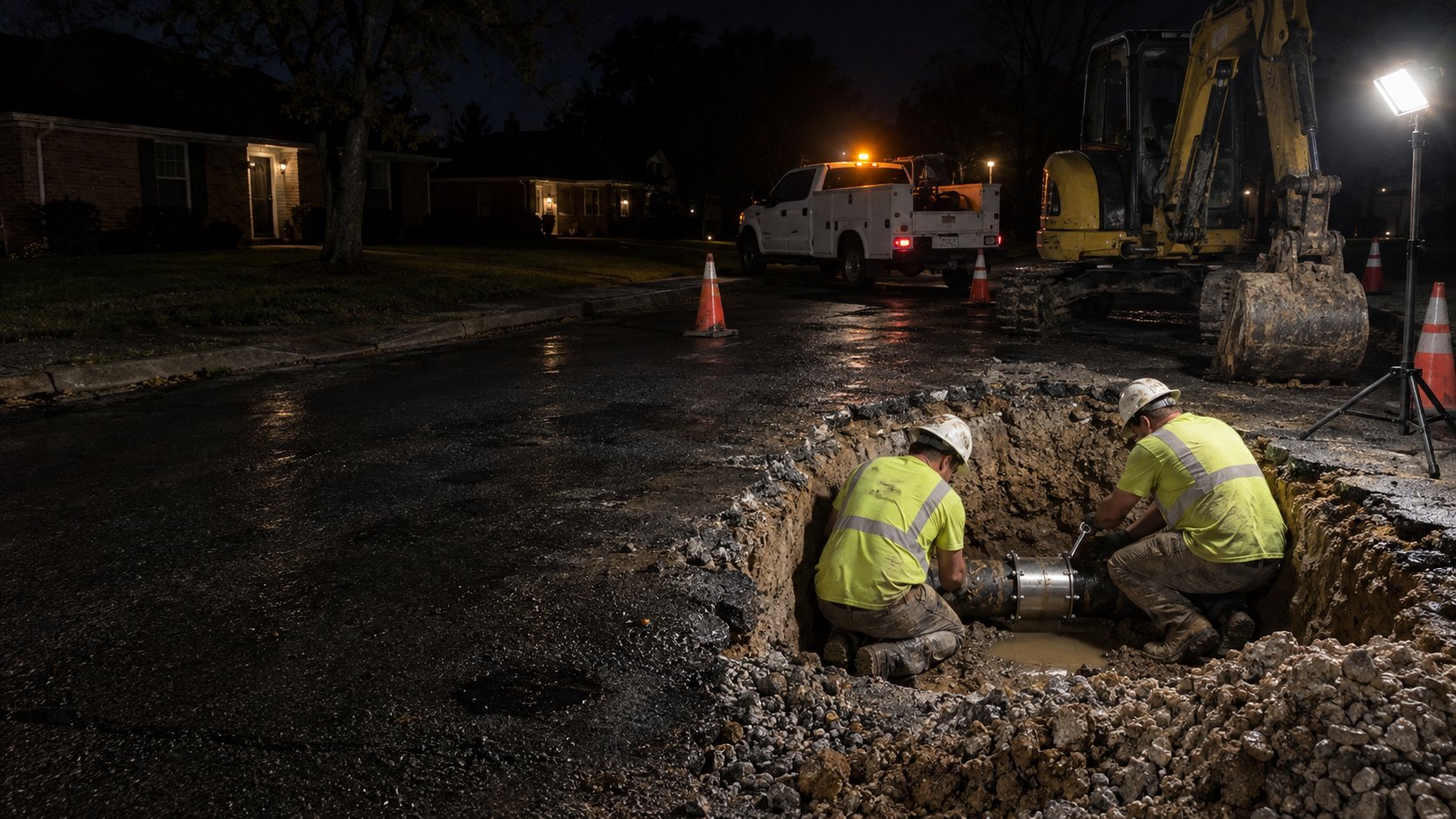
Crews safely excavate the affected area and complete repairs or replacements with minimal disruption to surrounding utilities.
Every repair is pressure tested and the line is sanitized before service is restored - the system is fully tested and proven before we leave.
Site is backfilled, compacted, and surface restored. The job is not done until the site is back to pre-failure condition.
Aging infrastructure, freezing conditions, or construction damage. PMT isolates and repairs water mains of all sizes.
Active projects often encounter underground utility conflicts. PMT responds quickly to identify, isolate, and resolve issues.
FDC or fire line failures require immediate attention. PMT responds around the clock to restore fire supply systems.
Force main failures, manhole collapses, or line blockages - PMT handles sewer emergencies for residential and commercial systems.
PMT maintains standby readiness during cold weather events when buried water infrastructure is most vulnerable.
Storm damage to culverts, detention systems, and drainage infrastructure. PMT responds before secondary damage compounds the loss.
PMT Site provides emergency infrastructure response across the Nashville Metro and surrounding Middle Tennessee counties. Our crews are based in Spring Hill and can typically reach any point in the service area withimmediately.
During active sewer installation at the Walton Station development, PMT's crew struck an 8-inch water main. The line separated at the bell fitting and began flooding a 20-foot-deep sewer trench - and eroding the bank beneath a live power pole.
PMT's field superintendent, Dom Charielle, called Metro emergency services immediately. When they couldn't provide a response window, Dom made the call: isolate the valves, assess the break, and self-perform the repair rather than wait.
The crew sourced a repair sleeve, cut and reconnected the line, poured a concrete kicker on emergency call, and passed the Metro bacteria sample - restoring service to the neighborhood in under four hours.